Planet saving changes in the kitchen
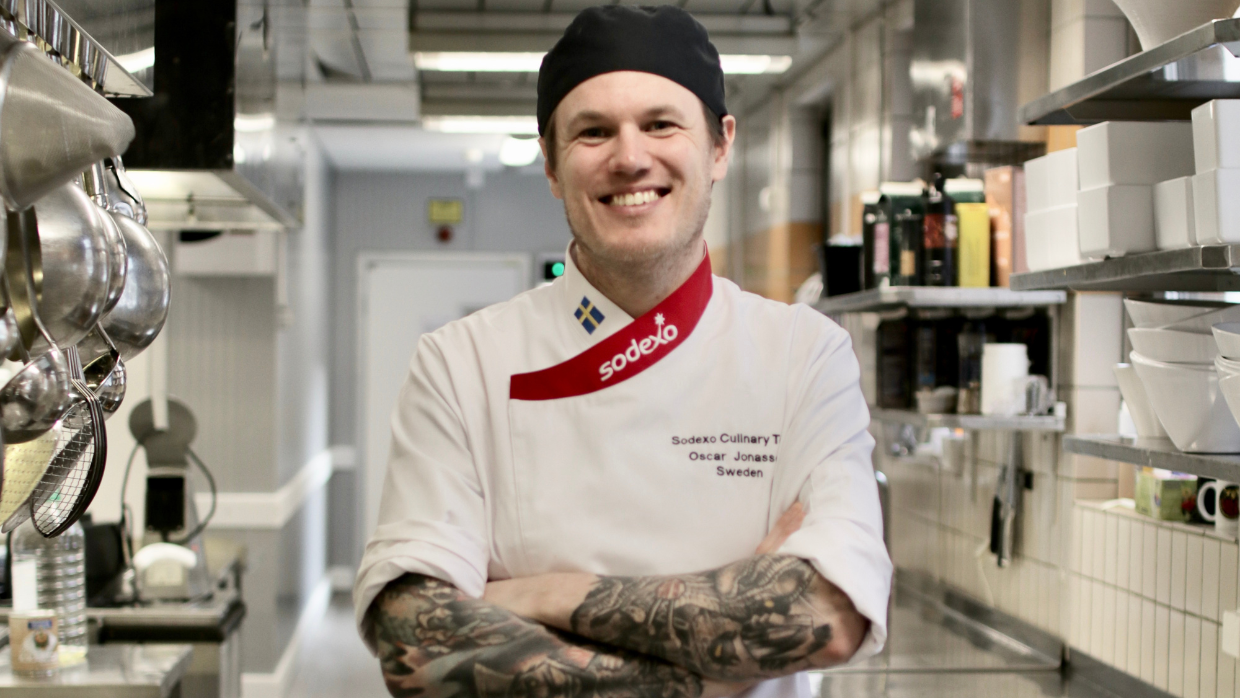
Smarter and better choices can more than halve the food's negative environmental and climate impact. At Restaurant Björken in Uppsala/Sweden, Sodexo's chef Oscar Jonasson and his team help the guests to change. Without sacrificing either taste or quality. Let us offer some tips that you can take with you this summer, whether you are cooking for yourself, your family or at a restaurant.
Measure and calculate
To change, you need to measure. In 2019, the climate impact of the average meal at Restaurant Björken was 1.7 kg CO2e. That’s about the same as in Swedish homes, but far from the Worldwide Fund for Nature's ideal plate One Planet Plate, which has a maximum limit of 0.5 kg CO2e.
Make sure that those who create recipes, plan and buy learn the climate impact of the various raw materials. In the autumn of 2020, Oscar Jonasson and his team took the effort needed to reduce the food's average climate impact to 1.0 kg CO2e. 30 percent of the guests chose the dish that had the lowest climate impact, a maximum of 0.5 kg CO2e.
“I set tough goals and I compete with myself. I never sacrifice on taste. We notice that even word choice can make a difference. Barbeque burgers with beets and lentils sound much more fun to many people than a ‘vegetarian burger’”,says Oscar Jonasson.
Climate impact cut in half
In 2021, more climate-smart changes were made, and a climate week was carried out in collaboration with Sodexo’s client Cytiva Life Sciences. It was a successful venture. By presenting the food's climate impact to the guests, their knowledge and opportunity to make climate-smart choices increased.
The commitment on the site has paid off. In 2021, the average was 0.7 kg CO2e, which is a halving since the start of the survey. Guests who chose a dish with the lowest climate impact, a maximum of 0.5 kg CO2e, increased to 35 percent. Only 3 percent chose a dish with a large climate impact, 1.5 kg CO2e or higher.
Oscar will soon join an internal group of creative chefs who will further develop Sodexo's central recipes both in terms of taste and environmental impact.
Here are some of Oscar's tips for climate change:
- Cook good food. Always and regardless of dish.
- Knowledge! Learn what is good and bad for the climate. Once you know it, it will be easy to work accordingly.
- Climate calculate all menus and cut the tops, i.e., remove or reduce raw materials with large climate footprints, such as beef and shrimp.
- Report the climate footprint of the dishes so that the guests can make conscious choices. We use the climate calculation tool Klimato.
- Keep track of wastage. If you get leftovers, exhibit as an extra dish at a buffet or use in other dishes during the week.
- Serve completely plant-based meals (vegan) instead of vegetarian, which has a greater climate impact.
- Serve meat but be smart. Replace beef completely or serve a maximum of once a month. A schnitzel on pork instead of veal reduces emissions from 4.3 to 0,7 kg CO2e.
- Avoid rice which has almost 30 times as high a climate impact as potatoes, pasta, and bread.
- Prepare popular dishes in a vegan version, such as plant based burgers, tacos, or something fried. It is a good gateway for those who are skeptical towards vegetables.
- Use multiple protein sources. Enrich the dish by replacing some of the meat with lentils, beans, and peas (soak and mix).
“I set tough goals and I compete with myself. I never sacrifice on taste. We notice that even word choice can make a difference. Barbeque burgers with beets and lentils sound much more fun to many people than a ‘vegetarian burger’”, says Oscar Jonasson.