The guests' climate footprint is controlled from the kitchen
Nowadays, healthy and climate-calculated menus, reduced food waste and the out phasing of plastics are some of the things that are self-evident at Electrolux in Stockholm. Health and sustainability are the keywords that permeate everything that Sodexo does together with the client at their headquarters in Stockholm.
Already in 2011, a restart was made in collaboration with the star chef Tom Sjöstedt. In with more greens and out with less healthy products.
"We usually say that we have "fewer than worse", which means that we replace instead of expanding the product range. For example, we have removed sweetened drinks and would rather spend an extra penny on raw materials than on sweetened water" says site manager Ulf Alexandersson.
At the same time, the salad plate was removed, resulting in less dishes and it also reduces the risk of guests taking more food than they can eat. It is better to have a second plate of food, if you don't get full after the first round at the buffet table. Plastic products have been replaced with environmentally friendly alternatives, but plastic film is still used to protect food.
Everyone needs to be reminded
Ulf Alexandersson is driving the sustainability culture forward together with the event coordinator Madeleine Skoglund. Every day at 2 p.m., they gather the whole team in front of a board in order to go through the food waste, the climate impact of the food and other things that need attention.
Reducing food waste has been a matter of course for several years, but both employees and guests need to be reminded not to fall back into old patterns. On the large digital screen in the restaurant, guests can follow the amount of food waste per day and per portion. There is also a monthly summary. The average for plate waste, what guests scrape off their plates, is 30 grams per serving, which is about the same as three cherry tomatoes in weight.
"Working in food services, we have an extra big responsibility. Five of our six measurement points are linked to what is done by the employees in the kitchen. We can see that wastage is significantly reduced when we raise the issue in the working group. When I ask what they have changed, they respond: "nothing special", says Ulf.
To reduce serving waste, which is another of the six measurement points, the food is presented in smaller containers towards the end of the lunch service. This reduces the wastage while the arrangement still looks pleasant and well-stocked even for guests who arrive late.
Climate calculated menues
But just focusing on food waste when the world is facing major climate challenges is not enough. It is Sodexo's job to help guests make climate smart choices. Since October 2019, our partner Klimato´s climate calculation tool is used, explaining in black and white how individual ingredients and dishes affect the climate in terms of carbon dioxide emissions. The climate calculations are used in the menu planning and the climate impact is then presented to the guests, so that they can easily see that a herb marinated veal roast with artichoke cream has a climate impact of 6.4 kg COe2 (carbon dioxide equivalents), while a vegan pea soup is 0.1 kg COe2.
The dish that has the least climate impact is presented at the top of the menu, and at the buffet, guests are first greeted by colorful vegetables. Next come carbohydrates such as potatoes and finally the protein. First vegan protein and finally animal protein. After two years, awareness in the kitchen and among guests has increased, and the average climate impact of the dishes has been reduced by 23 percent.
“The proportion of guests choosing the vegan option has doubled from 50 to 100 a day. When we served completely vegetarian food on Fridays two years ago, we lost 30 percent of the guests. The change was right on time, and now the public opinion has turned dramatically," says Ulf Alexandersson.
Out of little acorns grow huge oaks
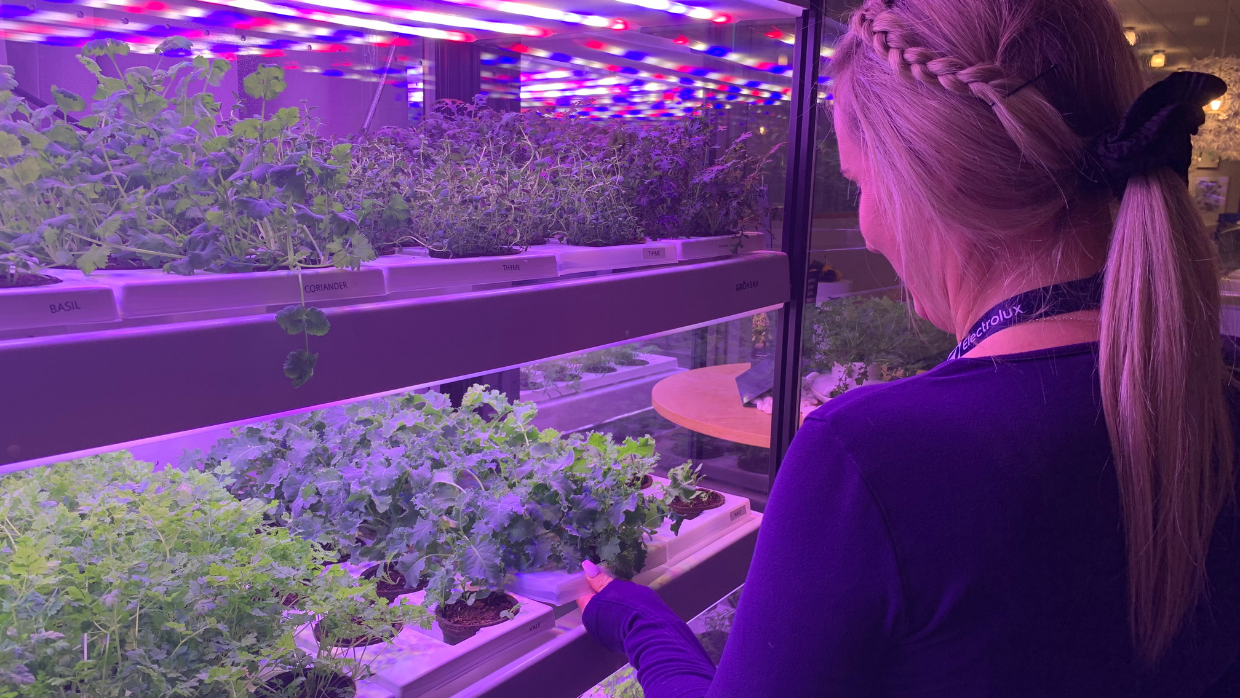
The restaurant also has vertical growing modules with herbs and lettuce in coconut shells. The cultivation is pesticide-free and has an innovative watering technology.
"Here cultivation has an important symbolic value and arouses conversation. Perhaps the engineers in the house are mainly interested in the technology itself, while others think it is a nice element in the environment," says Madeleine Skoglund, who is responsible for the catering assignments.
The catering is slowly starting to get going again, after lying dormant during the pandemic. The risk of food waste is obvious, since it is quite common to order for more people than is actually needed.
"We have experimented with food boxes with leftovers, but it doesn't always work. Now a lounge will be built, giving us better control over food waste while being able to offer the guests more choices," says Madeleine.
Finally, to attract the guests to make good climate choices, the cafe offers a 20 percent discount on cappuccinos and other specialty coffees if you reuse your mug.
You must think big and small and never underestimate the effect of every little acorn.
“The proportion of guests choosing the vegan option has doubled from 50 to 100 a day. When we served completely vegetarian food on Fridays two years ago, we lost 30 percent of the guests. The change was right on time, and now the public opinion has turned dramatically," says Ulf Alexandersson.